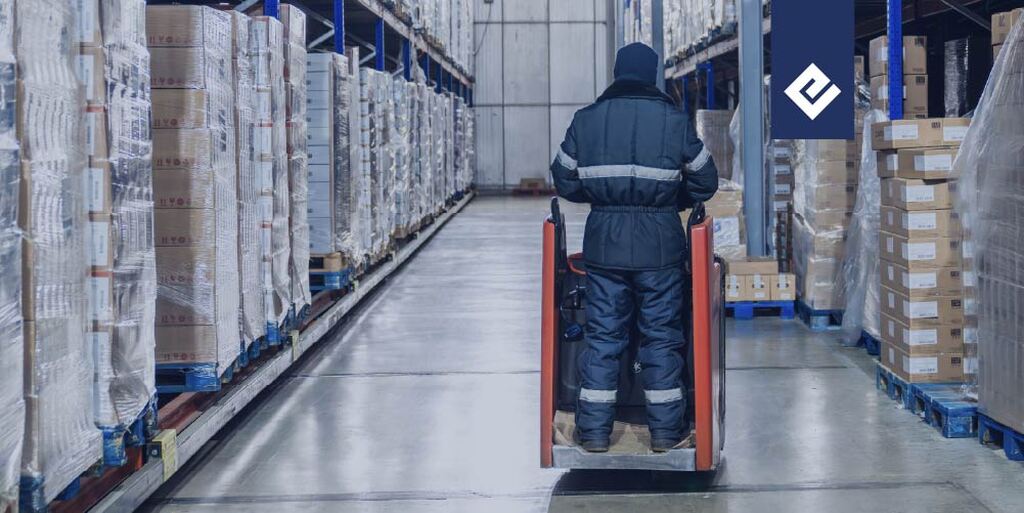


The temperature control of perishable foods is one of the most critical aspects in guaranteeing food safety and product quality.
Foods stored badly or transported in unsuitable conditions can represent a high risk to health, and consequently compromise the consumer’s experience.
Here we will explain how the temperature control of perishables should be done, as well as showing how Emergent Cold LatAm can help your company, check it out!
What is the temperature control of foods?
The temperature control of foods is the process that keeps perishable foods, such as meats, dairy, vegetables and fruits in suitable thermal conditions throughout all the stages of storage, transport and handling.
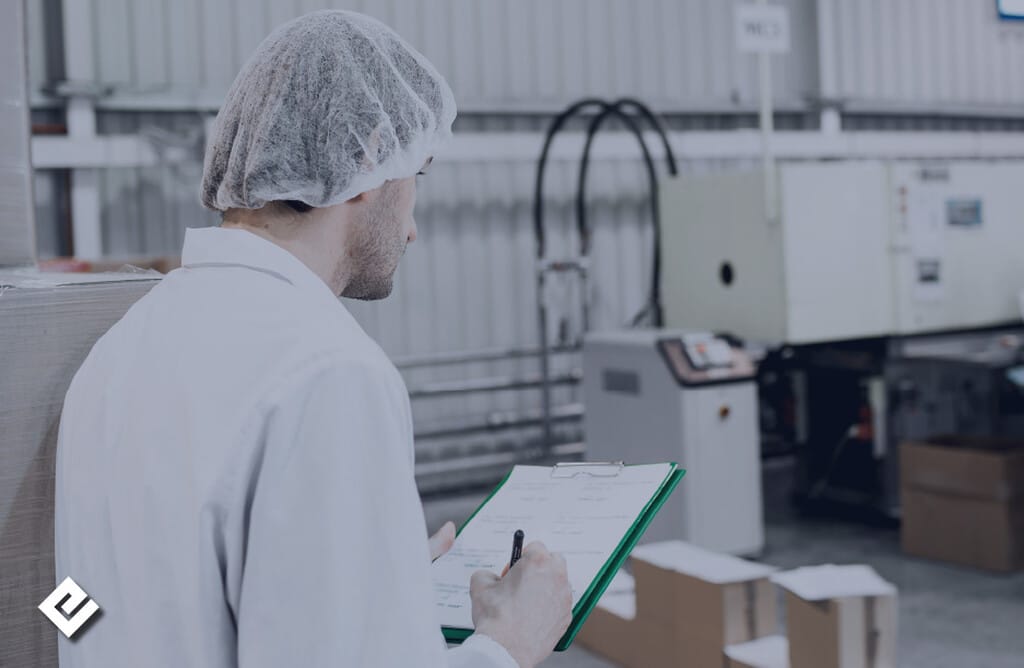
How is the temperature control of foods done?
The temperature control of perishables is done using specialized equipment, such as cold rooms, refrigerated chambers, vehicles for refrigerated or frozen foods, as well as digital thermometers and sensors.
The devices are responsible for monitoring and regulating the temperature within a safe range for each type of food.
Furthermore, it is fundamental that the professionals involved in the cold chain — from receiving through to transport — be trained (with good practices and the correct use of equipment) to handle and store the perishables correctly.
Other aspects linked with the importance of temperature control of foods
It is worth highlighting that, when the temperature of the perishable foods is not properly controlled, there is an increased risk of proliferation of bacteria, such as Salmonella and Listeria, which can cause serious food intoxications.
Besides this, the control is fundamental to avoid economic losses, as foods which are badly stored or improperly transported can deteriorate in a short time, resulting in waste (which impacts the revenue of companies directly as well as consumer confidence).
Good practices to preserve freshness and avoid deterioration of perishable foods
We will show more details below on how to maintain perishable foods.
Verification of temperature
The use of digital thermometers and temperature recording devices must be done at different points, such as refrigerated chambers or cold storage plants and in transport vehicles.
This care guarantees that the temperature is kept stable within the recommended range for each type of food. The correct variation in refrigerated chambers (normally between 0 °C and 5 °C) or cold storage plants, of (a -18 °C or less).
Compliance with regulatory standards
The temperature control standards of foods vary greatly, depending on the type of product and the country, but, in general, must observe the directives established by food health and safety bodies.
For example, in Brazil, the responsible body is ANVISA (Agencia Nacional de Vigilancia Sanitaria), whereas in the USA, it is the FDA (Food and Drug Administration). It is fundamental that companies know the standards required in the countries to which their products are to be exported.
Furthermore, it is important that the companies keep detailed temperature control records, such as temperature logs and equipment maintenance reports to ensure compliance with the legal requirements.
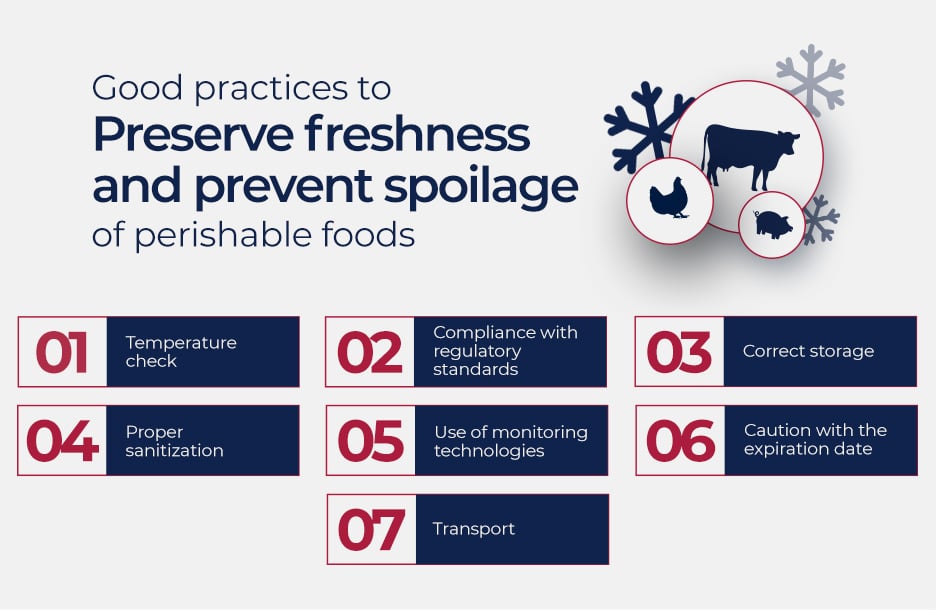
Correct storage
The suitable storage of the foods is one of the most important stages in the control of temperature — which is why the refrigerated chambers, cold storage plants, whether of refrigerated or frozen foods are essential.
The rigorous temperature control keeps the temperature and humidity at the ideal levels, avoiding variations that compromise the quality of the foods.
The foods must also be stored in an organized manner, with older items being used first, in accordance with the principle “first in, first out” (FIFO).
This practice helps avoid waste and guarantees that the products with shorter validity times are consumed first.
Suitable cleaning
Keeping the places of storage and transport properly cleaned is essential to avoid cross-contaminations and to guarantee food safety.
Surfaces, equipment, utensils and vehicles must be cleaned regularly with suitable products to ensure there is no proliferation of bacteria or fungi which can affect the foods.
The cleaning must be done in accordance with a schedule, and all the products used for cleaning must be approved by the regulatory bodies to guarantee they don’t contaminate the foods.
Use of monitoring technologies
The advance of technology has allowed the development of remote temperature monitoring systems, which can be integrated with the storage and transport equipment.
These systems issue alerts in real time, if the temperature of a given environment diverges from the ideal, corrective actions can be taken immediately.
Furthermore, the use of sensors and IoT devices (Internet of Things) allows continuous monitoring, improving the efficiency of the temperature control and reducing the risk of human error.
Care with period of validity
Temperature control also involves monitoring the period of validity of the perishable foods. It is important to adopt a stock management strategy which permits the accompanying of the product life cycle, reducing waste and guaranteeing food safety.
Transport
Besides the use of refrigerated vehicles or for frozen foods, which help to preserve the freshness of the foods, it is fundamental to use thermal packaging.
Another important precaution is to plan the transport routes in such a way as to minimize the transit time and the exposure of foods to thermal variations, guaranteeing that they arrive at their destination with the desired level of quality and safety.
Find out about our temperature-controlled storage and transport solutions.
At Emergent Cold LatAm, we offer specialized storage and transport solutions for perishable foods at controlled temperatures.
Our leading edge infrastructure and use of monitoring technologies guarantees the integrity of products throughout the whole cold chain.
Furthermore, our services are fully compliant with the local regulations, affording safety, efficiency and reliability to our clients.
Specifically we can highlight the following actions to optimize our warehouse operations and so maintain the freshness and safety of perishables:
- position the products strategically — place the high demand items close to the entry and exit doors, whereas those in lower demand are kept in areas further away;
- assign tasks to operators who are closer — designate the functions in accordance with the proximity of the operators, avoiding long journeys and increased productivity;
- prioritize pallets based on the time of permanence — allocate pallets to be stored for a longer time in less accessible places, whereas those with higher turnover should be close to the doors;
- adjust the picking lines — organize these in accordance with the demand for the products, guaranteeing efficient distribution;
- Schedule the replacement of stock — plan the resupply precisely to avoid that the picking operators have no products;
- make the best use of the pallets in picking — maximize the use of pallets to optimize the space in vehicles and reduce the number of trips.
- manage stock by date of validity — control the products with shorter period of validity or in accordance with the client’s requirements, to avoid waste and guarantee quality;
- load the trucks in accordance with the routes — organize the loading of the trucks in accordance with the routes and the capacity of the vehicles, promoting safety and efficiency in the transport;
- synchronize the loading with the unloading at the destination — load the trucks in accordance with the process planned of unloading, reducing the wait time and facilitating the delivery.
All this care is just a part of our services. With Emergent Cold LatAm, your products and success will go much further.